A PRACTICAL GUIDE · INDEPENDENTLY RESEARCHED
Dipropylene glycol, explained.
What is DPG, where is it used, and why does the grade matter? Explore the essentials of dipropylene glycol, from fragrance solvents to industrial materials, with clear explanations and links to manufacturer information and UK workplace guidance.
Explore the guide ↓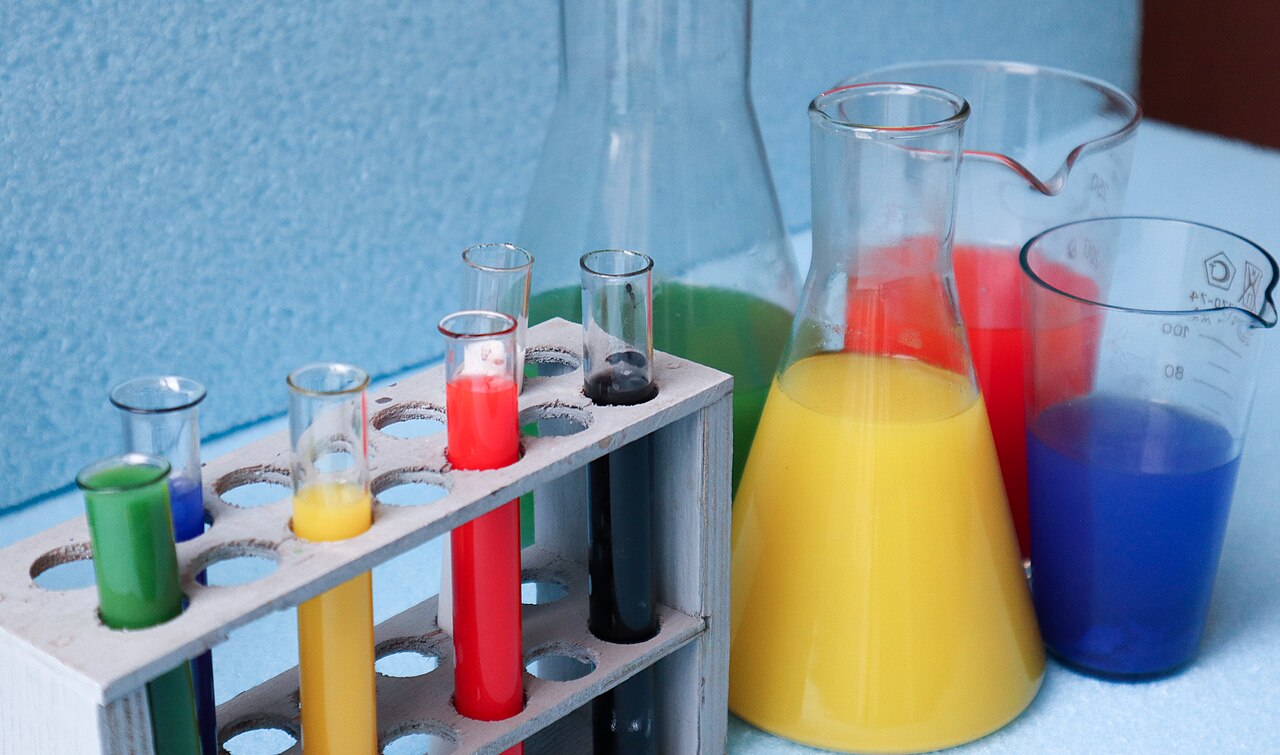
What is dipropylene glycol?
Dipropylene glycol, usually shortened to DPG, is an organic liquid used in formulated products and chemical manufacture. Commercial DPG is a mixture of structural isomers: molecules with the same molecular formula but different arrangements of their atoms. The commonly used CAS identifier for that mixture is 25265-71-8. Its formula is C₆H₁₄O₃ and its molecular weight is approximately 134.2 g/mol.
DPG belongs to the glycol family and has two hydroxyl groups. Those groups help explain why it can serve both as a solvent and as a starting material for making other substances. Dow describes its regular grade as a co-product of monopropylene glycol manufacture.
When reading a catalogue, distinguish the chemical identity from the particular product being offered. A name and CAS number help identify the substance; the supplier’s grade, specification and documentation tell you more about what is actually in the container.
Properties that explain its uses
Manufacturers describe DPG as a clear, colourless, water-soluble liquid with low vapour pressure. It is also hygroscopic, meaning it can absorb moisture. In practical terms, these properties matter when a formulator considers liquid compatibility, evaporation behaviour and protection from water contamination.
A solvent helps dissolve other ingredients. A coupling agent helps ingredients work together in a formulation. As a chemical intermediate, DPG is used to make another material rather than simply remaining as the liquid carrier. These are different jobs, even though the same broad chemical name appears in each.
Treat numerical properties as values with conditions attached. Temperature, test method and product grade can affect how a figure should be interpreted. A viscosity number without its measurement temperature is an incomplete comparison. Manufacturer tables of typical properties are useful for initial research, but are not automatically the agreed sales specification.
Where DPG is used
Fragrance and personal-care formulations are familiar uses, but they are only part of the picture. Low-odour DPG grades are marketed for applications where the carrier should contribute as little unwanted smell as possible. That is why the grade description matters to a fragrance manufacturer, not just the letters DPG.
Industrial applications include the manufacture of plasticisers and unsaturated polyester resins. Shell also lists uses associated with urethane polyols, alkyd resins, inks, paints and functional fluids. In some applications DPG acts as a solvent; in others it participates in making the finished material.
An application list is a starting point for discussion with a supplier, not a ready-made formulation. Suitability depends on the other ingredients, manufacturing process and intended use of the finished product. This guide does not sell chemicals or provide mixing recipes; its purpose is to make the terminology and source documents easier to navigate.
Regular grade or low-odour grade?
Products sharing the name dipropylene glycol are not necessarily offered to the same specification. For example, Dow describes its regular grade as having purity above 99%, while its cited LO+ JSQI product is above 99.5% and designed for odour-sensitive applications such as fragrances and cosmetics. These are descriptions of particular Dow products, not universal definitions for every supplier’s grades.
For a purchasing enquiry, explain what the material needs to do. Ask about the exact grade, purity specification, odour requirements, water content and the documentation available for your intended application. A supplier can then respond to a defined requirement rather than a request for “some DPG”.
A low-odour or high-purity description alone does not establish that a material is suitable for ingestion, inhalation, pharmaceuticals or every cosmetic formulation. Obtain explicit application information for the exact product. Do not transfer an approval or suitability statement from one glycol or grade to another.
DPG, PG and DPM are different
Similar abbreviations can cause avoidable confusion. Propylene glycol, often called PG or monopropylene glycol, has CAS number 57-55-6. Commercial dipropylene glycol uses 25265-71-8. They are related glycols, but they are different substances with different properties.
Dipropylene glycol methyl ether is different again. It is commonly abbreviated DPM and appears in Dow’s glycol ether tables with CAS number 34590-94-8. The extra words “methyl ether” are not a minor spelling variation: they identify a different chemical.
When comparing quotations, check the full product name and CAS number on the quote, label and supporting documents, then check the grade. Avoid substituting products simply because a search result, forum post or shortened listing uses similar initials. If the documentation does not match, resolve the discrepancy with the supplier before choosing the material.
Read the right documents
A technical data sheet describes a product’s characteristics and possible applications. A sales specification sets out the agreed product requirements. A safety data sheet, or SDS, addresses hazards, handling, storage and emergency measures. These documents answer different questions; one cannot do every job.
Start with the supplier’s exact product name and obtain the current documents relevant to where it will be used. Check the document date, product identifier and supplier details. A general technical reference found online is useful background, but it should not displace the information supplied for your purchase.
HSE makes an important distinction for workplaces: an SDS supports a risk assessment, but is not itself that assessment. Reading the sheet tells you about the material; assessing the task considers how people will actually encounter it. The links below explain that distinction and provide a manufacturer’s route to current SDS documents.
Handling and storage in context
DPG’s ability to take up moisture makes storage conditions relevant to product quality. Shell’s technical guidance calls for protection from water contamination and moisture absorption, and advises against contact with copper, copper alloys or zinc. Check your own supplier’s instructions for suitable containers, storage conditions and shelf life rather than applying another product’s figures automatically.
For workplace use, consider the actual operation: transferring a liquid, heating a formulation and cleaning equipment can create different opportunities for exposure. Use the SDS and a task-specific assessment to select controls and protective equipment. HSE’s guidance covers identifying exposure routes, deciding who could be affected and reviewing controls when the work changes.
Low vapour pressure or a mild-sounding product description does not remove the need to assess the job. Keep the relevant handling, spill and emergency instructions accessible to the people doing the work. If information is missing, ask the supplier before proceeding.
Independent, and open to better information.
This guide is published by UK Domain Trader. It is an introductory resource, not personalised professional advice or an endorsement by the organisations listed. Links are included to help you find reliable information. No business has paid for an editorial mention in this guide. Know a useful resource, or spotted something that needs correcting? Tell us below.
Research sources and image attribution
- Dow: DPG Regular Grade · researched 2026-09-29
- Dow: A Guide to Glycols (PDF) · researched 2026-09-29
- Shell: DPG technical datasheet (PDF) · researched 2026-09-29
- Dow: low-odour DPG for fragrance and cosmetics · researched 2026-09-29
- Dow: glycol ether names and CAS numbers (PDF) · researched 2026-09-29
- HSE: understanding chemical safety data sheets · researched 2026-09-29
- HSE: carrying out a COSHH assessment · researched 2026-09-29
- Shell: find chemical safety data sheets · researched 2026-09-29
Photograph: Belikov Maxim / Wikimedia Commons. Original and rights information. CC BY 4.0. Displayed without alteration; the responsive layout may crop its visible area.
MAKE A CONNECTION
A distinctive name.
Your next idea.
dpg.org.uk is listed with UK Domain Trader. View the current asking price and purchase options on the marketplace, or send a buying enquiry.
View dpg.org.uk ↗Your privacy
UKC LABS LTD, trading as UK Domain Trader, operates this guide. The enquiry form sends your name, email, message and enquiry type to our central inbox so we can respond. These details are not published or sold. Enquiries are retained for up to 365 days unless a longer period is needed to handle an ongoing request or legal obligation. We process enquiries to respond to your request and administer our business; ticking the acknowledgement does not subscribe you to marketing.
We count page requests and useful-link clicks without visitor tracking cookies. Security controls use short-lived pseudonymous rate-limit records, and server security logs may contain IP addresses. To request access, correction or deletion of your information, use the contact form and select correction, or visit UK Domain Trader’s privacy policy. This form is not an emergency or public-service reporting channel.